Key Takeaways
- UV light reaches your eyes on cloudy days and in every season, not just in summer.
- Sun exposure over many years is linked to cataracts, macular changes, and surface irritation.
- Look for lenses labelled 100% UVA and UVB protection or UV400.
- Wrap-around frames block light sneaking in from the sides.
- Children, outdoor workers, drivers, and adults 65+ benefit from added protection.
- Regular eye exams can spot early lens and retinal changes.
You reach for sunglasses when the July glare bounces off the pavement and makes you squint on the walk to your car. Then September comes, the light softens, and the sunglasses stay in the glove box until next year, a pattern our team at Eye Q Optometry hears about every fall.
UV protection sunglasses matter because ultraviolet light reaches your eyes all year long, and the damage it leaves behind builds up quietly over decades, often without any pain to warn you.
What UV Rays Do to Your Eyes
Ultraviolet light is invisible. You can’t see it, and you rarely feel it in the moment, which is what makes it easy to ignore. It passes through your thin eyelid skin and reaches the cornea, the lens, and in smaller amounts the retina at the back of your eye.
Your eyes don’t heal from this exposure the way a sunburn on your arm fades. Each hour outdoors without protection adds to a total your eyes carry for life.
Eye Conditions Linked to Sun Exposure
Researchers have connected long-term UV exposure to several changes in the eye, including:
- Cataracts, a gradual clouding of the lens inside your eye that makes headlights look hazy and colours seem washed out.
- Age-related macular degeneration, which affects the central vision you use for reading faces and street signs.
- Photokeratitis, a sunburn on the surface of the eye common after a bright day on snow or open water.
- Growths on the white of the eye, such as pterygium, that can creep toward the cornea over time.

Signs You’ve Had Too Much Sun
A long afternoon on the lake or the ski hill can leave your eyes complaining by evening. Watch for these signs:
- Redness, watery eyes, or a gritty feeling like sand under your lids.
- Sensitivity to light and hazy vision.
- A raised bump or new colour change on the white of the eye.
- Dry, flaky skin on the eyelids.
Why You Need Sunglasses Year-Round
Cloud cover feels protective, though a good portion of UV light passes right through it. Overcast days can leave you exposed while you assume you’re fine.
Reflection adds to the load. Fresh snow bounces a large share of UV light straight back up at your face, and water, sand, and concrete sidewalks do the same. On a bright winter morning in Calgary, your eyes take light from above and below at once.
Who Needs Extra Protection
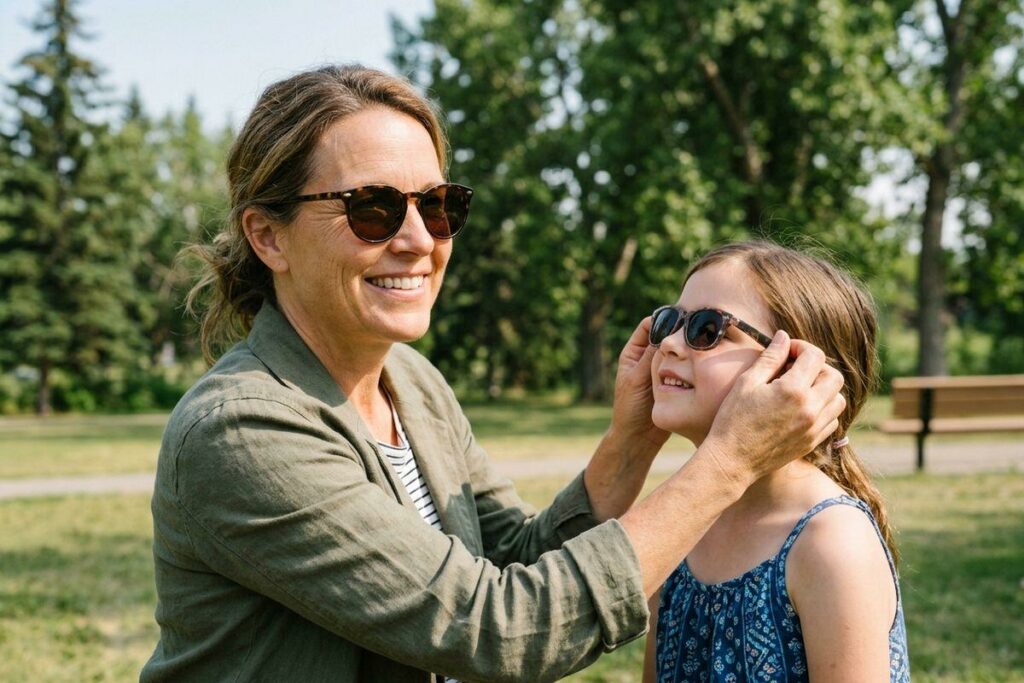
Children and teens have clearer lenses, so more light reaches the retina than in an adult eye. Habits formed at age six tend to stick, which makes early sunglasses worth the effort, along with regular children’s eye exams.
Adults who work outdoors, cycle, golf, ski, or spend hours driving into low sun collect exposure quickly. For adults 65+, the long-term accumulation of ultraviolet light makes routine preventative checks more vital than ever; staying ahead of age-related changes relies heavily on proactive care.
How to Choose the Right Protection
Not all tinted lenses offer real defence. A dark fashion tint without UV protection can cause your pupils to dilate, allowing more harmful UV rays to reach your eyes.
When shopping for reliable eyewear, keep these benchmarks in mind:
- Check the label: Look explicitly for 100% protection against both UVA and UVB rays, or a rating of UV400, which blocks light wavelengths up to 400 nanometers.
- Consider frame shape: Wrap-around styles or larger frames prevent stray rays from sneaking around the edges and reflecting off the back of the lenses into your eyes.
- Polarization vs. UV: While polarization cuts down on blinding glare from water, snow, or pavement, it does not automatically block UV light. Always verify the UV rating separately from the polarization feature.
Your Vision Deserves Year-Round Care
Protecting your sight is a daily habit that pays off across a lifetime, whether you are driving through the autumn glare or enjoying a bright winter afternoon outdoors. Pairing quality sunglasses with routine, comprehensive eye exams gives your eyes the best defence against cumulative damage.
If it is time for your annual checkup or you need help finding frames that fit your lifestyle, stop by and speak with our team at Eye Q Optometry. We are always here to help you keep your vision clear and healthy for decades to come.