Key Takeaways
- What you see is processed throughout the brain, so a head injury can affect much more than how your eyes work together. It can affect how your eyes move, how you understand what you see, how vision contributes to balance, and how your brain uses visual information to guide movement, attention, and other processes.
- Double vision, headaches, dizziness, and light sensitivity are common after a concussion.
- A different prescription, prism lenses, or a tint can reduce strain for some people.
- Vision therapy can help retrain eye teaming, focusing, tracking, and visual perceptual skills, while also addressing motion sensitivity and balance issues when they are visually driven.
- Symptoms may become more noticeable once you return to work, screens, school, or other visually demanding activities.
You hit your head during a football game, fall on the ice during hockey, or have a fender bender. The headache faded, but words on a page still swim, grocery store lights feel harsh, and walking down a busy sidewalk leaves you queasy.
After a brain injury, Eye Q Optometry can help address vision-related symptoms with therapeutic glasses, such as a new prescription, prism, or tint, and vision therapy, which works on visual skills, processing, and how the visual system interacts with other sensory systems.
Why a Head Injury Can Change the Way You See
Your eyes collect light, but your brain does most of the work of turning that light into a clear, steady picture. Large portions of the brain take part in that process, which is why a knock to the head can affect sight even when the eyes themselves are healthy.
When the communication between the eyes and brain gets disrupted, the two eyes may stop pointing at the same spot. Focusing can become slow. Tracking a line of text can feel like reading in a moving car. A concussion can affect these basic visual skills, but it can also change how the brain interprets, filters, and uses the visual information it receives.
Several visual skills have to work together for comfortable vision. Accommodation allows the eyes to change focus when looking at objects at different distances, while convergence allows both eyes to turn inward and maintain a single image when looking up close. Saccades are quick eye movements that help us move from one word or target to the next, while smooth pursuits allow the eyes to follow a moving object. After a brain injury, one or more of these systems may become less efficient or harder to coordinate, which can contribute to blurry or double vision, headaches, eye strain, and difficulty reading.
A concussion can also affect how the brain processes and interprets visual information once it has been received. Some people may experience visual motion sensitivity, difficulty judging where they are in relation to their surroundings, or a visual-vestibular mismatch, where visual information does not align well with information from the vestibular system that helps control balance and eye movements. These changes can make busy environments, moving objects, or changes in position feel overwhelming or disorienting. Visual processing can also affect skills such as recognizing familiar faces or words, remembering visual information, and understanding where objects are in relation to the body and surrounding space. As a result, everyday tasks that rely on accurate visual information can become more difficult after a concussion.
Timing surprises many people. Symptoms sometimes show up days or weeks after the injury, once you return to work, screens, or a full school schedule.
Vision Symptoms to Watch for After a Brain Injury
Post-injury vision problems often get blamed on tiredness or stress. Paying attention to patterns helps you describe them clearly at your appointment. Watch for:
- Double or blurry vision, especially while reading or looking between near and far
- Headaches behind the eyes or across the forehead after 10 or 15 minutes of close work
- Dizziness, motion sickness, or a pulling sensation in busy places like a mall or grocery store aisle
- Light sensitivity, trouble with glare from headlights, and a feeling of visual overload
Vision works closely with the vestibular system, which helps the brain understand head movement and maintain balance. After a brain injury, the brain may struggle to integrate visual and vestibular information, which can contribute to dizziness, nausea, or discomfort in busy or moving environments.
You may also notice changes in visual processing, such as difficulty recognizing familiar faces or words, remembering visual information, judging where objects are in relation to your body, or accurately understanding your visual location in relation to the surrounding space.
Signs in Children and Teens
A child may not speak up if something is wrong with their vision. Instead, grades can slip, homework may take twice as long, and they lose their place mid-sentence.
Therapeutic Glasses, Prism, and Tints
Vision therapy is not the only route to feeling better. For many people, the right prescription can reduce the visual effort required for everyday tasks. A small change in focusing power can make reading a recipe or work email more comfortable. If your eyes are aiming slightly differently after an injury, prism built into the lenses can help compensate for the alignment difference. Prism works by bending incoming light and shifting the image seen through the lens, which can reduce the effort required for the eyes to maintain a single image. An eye exam determines the amount and direction of prism based on how the eyes are aligned and functioning.
Prism can also be used in a different way, called yoked prism, to address certain visually driven vestibular, spatial, and balance concerns. When the visual system and vestibular or proprioceptive systems are not providing information that lines up well, you may feel disoriented, unsteady, or uncomfortable with movement. Yoked prism changes the visual location of images to help bring visual information into better alignment with information coming from the vestibular and proprioceptive systems, making it easier for the brain to interpret these different sensory inputs together.
A light tint can also take the sting out of fluorescent office lights or the glare bouncing off a snowy parking lot. These are sometimes called therapeutic glasses because the lenses are selected for comfort and function, not simply for clear letters on a chart. Our team may adjust the prescription or lens options as your symptoms change through recovery.
How Vision Therapy Can Retrain Eye Teaming
Vision therapy works on the visual skills and processing abilities that support clear, comfortable, and efficient vision—not just lens power. It can address how the eyes point, focus, and track together, as well as visual perceptual skills and how the visual and vestibular systems work together. Vision therapy may also target visual processing challenges such as reduced peripheral awareness, difficulty filtering motion, trouble remembering or recognizing visual information, or difficulty making sense of what you see in busy environments.
Depending on the visual problems identified during an assessment, vision therapy may target skills such as convergence, accommodation, eye movements, and visual tracking. Exercises are selected based on the individual’s specific difficulties and are gradually adjusted as those skills improve. The goal is not simply to strengthen the eyes, but to improve how efficiently the visual system coordinates these tasks.
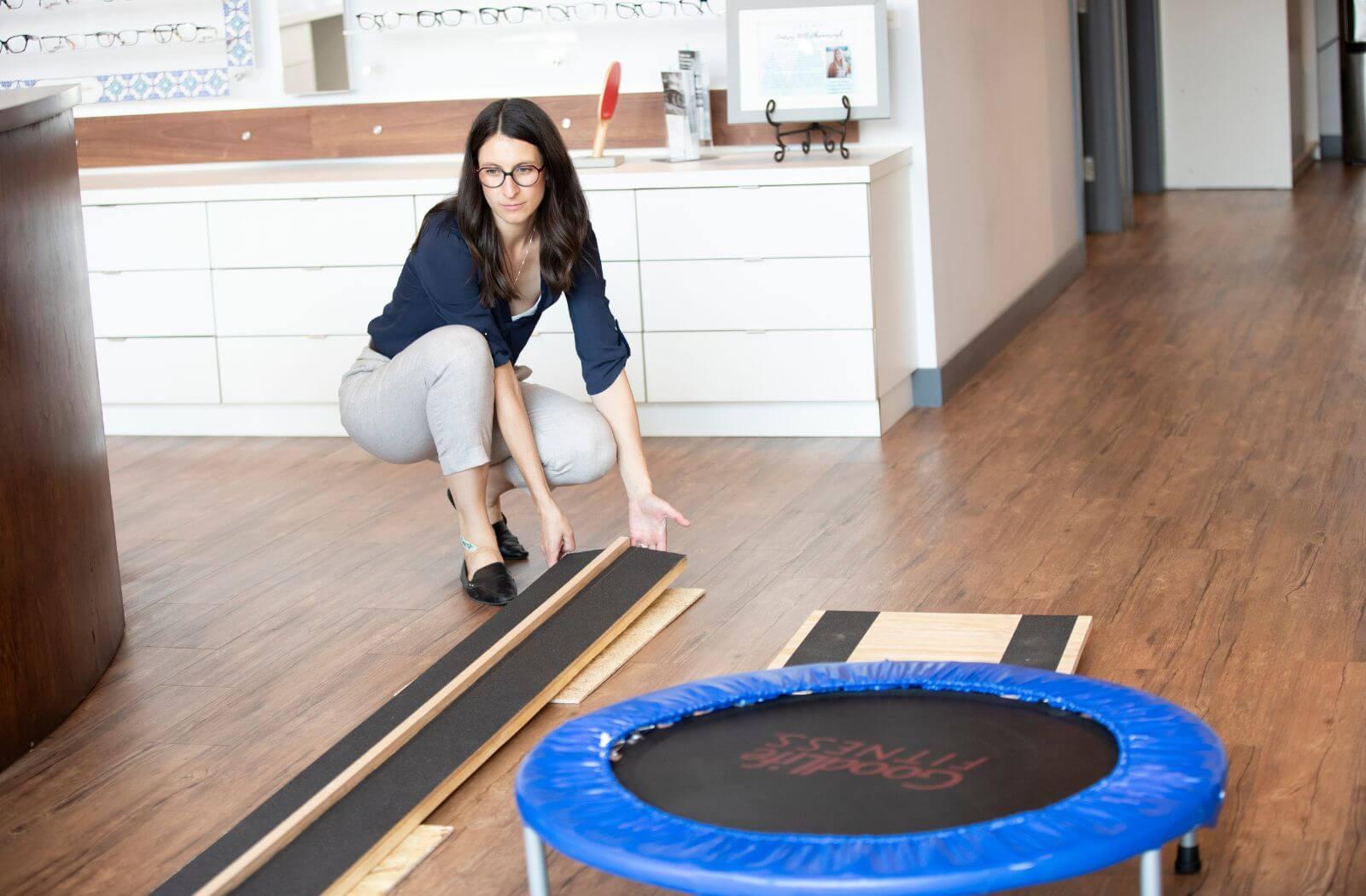
Sessions may use lenses, prisms, filters, and targets you follow with your eyes, along with short activities to repeat at home. Progress tends to be gradual, and the goal is steadier reading, easier screen time, and less dizziness in busy spaces.
Some people use glasses and therapy together. The glasses reduce strain right away, while the therapy builds the skills underneath.
What to Expect from an Eye Doctor in Killarney
A post-injury appointment goes further than a standard vision check. Your optometrist assesses how well your eyes work together, how quickly they shift focus between near and far, how they track a line of print, and how they respond to light and movement. They may also assess how your visual system interacts with your vestibular system, which helps control balance and spatial orientation, and your proprioceptive system, which helps your brain understand where your body is in space.
Bring the details. When the injury happened, which tasks feel worst, and how long you last on a screen all help shape the plan, whether that turns out to be therapeutic glasses, therapy, or both.
If reading, driving, or a full workday still feels harder than it should, an eye doctor in Killarney at Eye Q Optometry can look at what changed and talk through the options. Book an eye exam to get started.