Key Takeaways
- Cataracts form when proteins in the lens of your eye clump together and cloud your view.
- Some babies are born with cataracts, though cataracts usually develop with age.
- Early signs include dim vision, glare from headlights, and faded colours.
- Routine eye exams help your optometrist spot a cataract, often before it affects your daily life.
- New glasses can help early on, and surgery can replace the cloudy lens when daily tasks get difficult.
Street lights start to bloom into soft halos. The book you’re reading needs a brighter lamp than it did last year. Colours in your kitchen look a little washed out, like someone turned down the saturation. Changes like these are worth bringing up at your next visit to Eye Q Optometry.
You may be getting cataracts if your vision turns cloudy or dim, colours look faded or yellowed, lights create glare and halos, and night driving feels harder than it used to, though only an eye exam can confirm it.
What Are Cataracts?
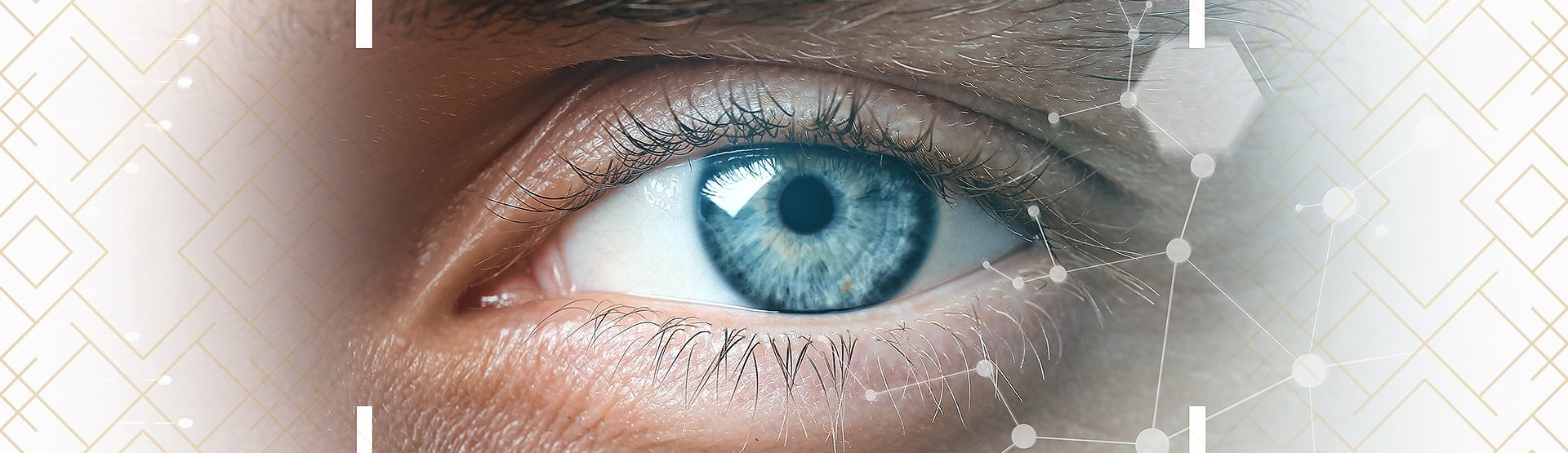
Your eye has a clear lens sitting behind the iris, and it focuses light onto the retina at the back of your eye. Over time, the proteins inside that lens can clump together. Those clumps scatter light instead of letting it pass cleanly, so your view starts to look like a window fogged by steam.
The lens is normally transparent because its proteins are arranged in a precise way that allows light to pass through with minimal scattering. With age and other risk factors, changes to these proteins and the lens environment can cause the lens fibres to become less transparent. As the lens becomes cloudy, incoming light is scattered rather than being focused cleanly onto the retina. This can reduce contrast and make images appear hazy, especially in bright or high-glare conditions.
Cataracts usually form in both eyes, but rarely at the same speed. One eye might feel noticeably hazier than the other for years. That’s part of why the change may slip past you, since the stronger eye quietly picks up the slack. A cataract found early can be watched over time instead of treated right away.
Who Gets Cataracts and When
Cataracts at Birth or in Childhood
Some babies are born with cataracts, and others develop them during childhood. These are linked to genetics, an infection during pregnancy, or eye injury. A child with a cataract may squint often, tilt their head, or show a cloudy grey spot in the pupil, which is why early childhood eye exams matter.
Age-Related Cataracts
Age-related cataracts are the most common type, and given enough time, nearly everyone will develop some degree of lens changes. Small changes can begin in your 40s and 50s without affecting how you see. By your 60s and beyond, those changes tend to become more noticeable. Cataracts are a normal part of aging, and because they are so common, your eye doctor can routinely monitor them and recommend treatment when they begin affecting your daily life.
Other Risk Factors
Some factors are associated with cataracts forming earlier, including:
- Diabetes or blood sugar that stays high
- Smoking
- Years of unprotected UV exposure from sunlight
- A family history of cataracts
- A past eye injury or eye surgery
- Long-term use of steroid medications, including certain over-the-counter options such as steroid nasal sprays
These factors can contribute to changes in the lens that accelerate damage to its proteins and fibres, increasing the likelihood of cataract formation.
Symptoms and Early Signs to Watch For
Cataract symptoms creep in quietly, and can include:
- Cloudy, blurry, or dim vision
- Halos or rings around lights
- Double vision in one eye
Cataracts can also increase light scatter inside the eye. Instead of light from a headlight or street lamp forming a clean image on the retina, some of the light is scattered by the cloudy lens. This can create glare, halos, or starburst-like effects around bright lights and may make night driving particularly uncomfortable. While cataract-related glare comes from light scattering through the cloudy lens, keeping the ocular surface healthy and treating dry eye can also help reduce some glare and improve visual comfort.
As some cataracts develop, the lens can become increasingly yellow or brown. This changes the way certain wavelengths of light pass through the lens, which can make colours appear less vivid or more yellow than they once did. Because the change happens gradually, people may not notice it until they compare their vision with something they remember seeing more clearly.
You might notice you’ve stopped driving after dark, or you’ve started turning on every lamp in the room to read a recipe. Those small habit changes often say more than a chart does.
How an Eye Doctor in Killarney Checks for Cataracts
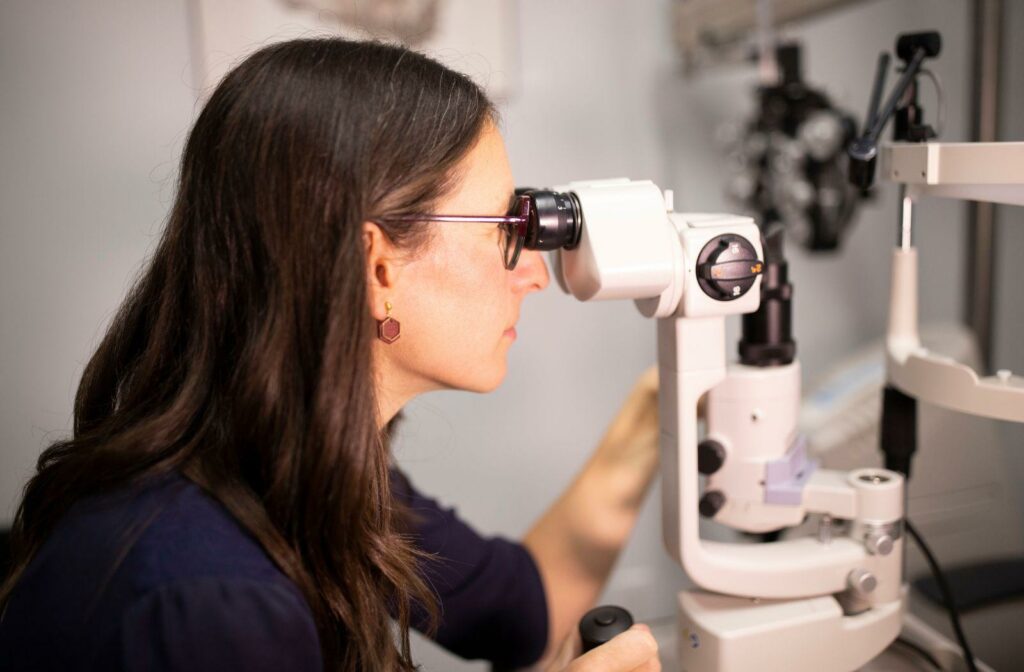
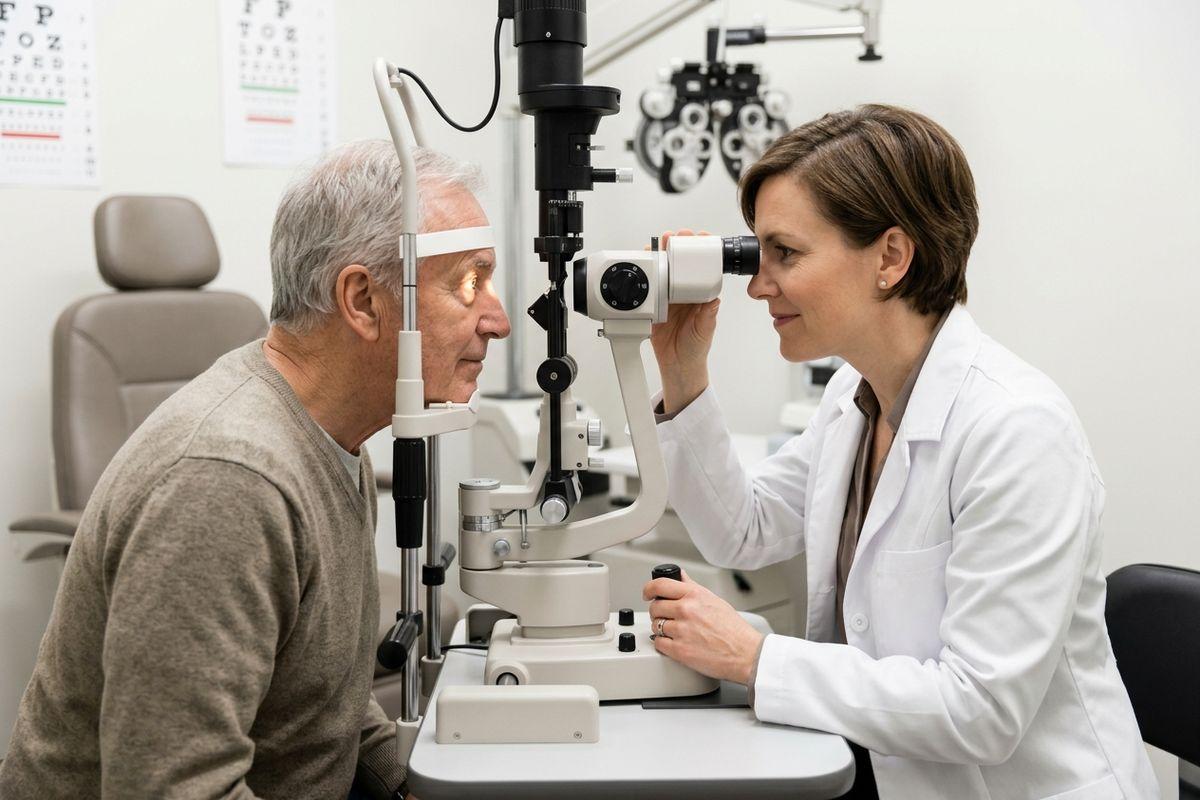
Cataracts can show up clearly during an eye exam. Your eye doctor may also need to dilate your eyes with drops that widen your pupil. They will then use a bright light and magnifying lenses to look straight through the lens of your eye. A cataract appears as a cloudy or yellowed patch, and the location tells your eye doctor a lot about why your vision feels the way it does.
Cataracts can develop in different parts of the lens.
- Nuclear cataracts affect the central portion of the lens and may cause gradual yellowing and changes in focusing power.
- Cortical cataracts develop in the outer lens and can cause light scattering, glare, and halos.
- Posterior subcapsular cataracts form toward the back of the lens and can interfere with near vision and cause significant glare.
You’ll also read a chart to measure how sharp your vision is, and our team may test how much glare affects you. Your prescription gets rechecked too, since changes in the lens can alter its refractive properties and cause your prescription to shift. Some people may temporarily become more nearsighted or notice that their glasses no longer provide the same clarity. If a cataract is present, your optometrist can track it at each follow-up visit and note how quickly it’s changing.
Treatment Options for Cataracts
Early on, small adjustments can help manage changes in vision and keep you comfortable, but they do not remove or reverse the cataract. An updated glasses prescription, brighter task lighting, anti-glare lens coatings, and sunglasses with UV protection can all help you read, cook, and drive with less strain.
When a cataract begins making daily tasks difficult, cataract surgery may be the next step. Cataract surgery is a routine procedure in which a surgeon removes the cloudy lens and replaces it with a clear artificial lens. The procedure is typically performed one eye at a time. Recovery is generally fairly quick, but your surgeon will provide specific instructions about when you can safely resume different activities. For children born with cataracts, treatment may include surgery followed by glasses, contact lenses, or patching to support how the brain and eye work together.
Can Eye Drops or Diet Get Rid of Cataracts?
You may come across advertisements for eye drops or supplements claiming to treat or even reverse cataracts. However, there are currently no eye drops that can remove an established cataract. Cataracts form within the lens of the eye, and the lens does not have its own blood supply, so food and supplements cannot simply reach the lens and reverse the clouding. When a cataract begins significantly affecting your vision or daily activities, surgery is the established treatment.
We Can Help
Your optometrist at Eye Q Optometry can walk you through what to expect, refer you when surgery makes sense, and handle your care before and after the procedure.
If lights are glaring, colours look dull, or night driving feels different, book a comprehensive eye exam with Eye Q Optometry and get a clear answer about what’s changing in your eyes.