Key Takeaways
- Myopia blurs distant objects, while hyperopia typically blurs close-up objects and, in more severe cases, can also make distant objects appear blurry.
- Both conditions are refractive errors linked to how the eye focuses light.
- Symptoms can appear in children and adults.
- For myopia control, treatment options can include glasses, contact lenses, and atropine eye drops.
- Regular eye exams help catch changes early and keep your prescription accurate.
Your child squints at the whiteboard from across the classroom. You find yourself holding your phone farther away just to read a text. These everyday moments can be easy to brush off, but they often point to something a simple eye exam can clarify.
Myopia and hyperopia are both refractive errors, meaning the eye has trouble focusing light correctly, but they affect your vision in opposite ways. Knowing the difference can help you spot the signs early and take the right steps for yourself or your child. Eye Q Optometry offers personalized eye care to help you navigate both conditions.
Signs and Symptoms to Watch For
Myopia Symptoms
Myopia, commonly called nearsightedness, makes distant objects look blurry while close-up vision typically stays clear. Symptoms can include:
- Blurry vision when looking at objects far away
- Frequent squinting, headaches, or eye strain
- Children moving closer to screens or the front of the classroom
Hyperopia Symptoms
Hyperopia, or farsightedness, makes close-up tasks harder. The symptoms of hyperopia can sometimes be subtle, especially in younger children whose eyes can partially compensate on their own. Symptoms can include:
- Blurry vision during reading or close-up tasks
- Eye strain or headaches after detailed work
- Children losing interest in drawing or reading
Key Differences Between Myopia and Hyperopia
How Each Condition Affects Your Vision
The difference comes down to where light lands inside the eye. With myopia, light focuses in front of the retina instead of directly on it, which blurs objects in the distance. With hyperopia, light focuses behind the retina, making nearby objects harder to see clearly.
Eye Shape and Age of Onset
Eye shape plays a role in both conditions. Myopia tends to develop in eyes that are slightly elongated front to back, and it often begins during childhood, sometimes progressing through the teenage years. Hyperopia, on the other hand, is associated with eyes that are shorter or flatter than average. It can actually be present from birth.
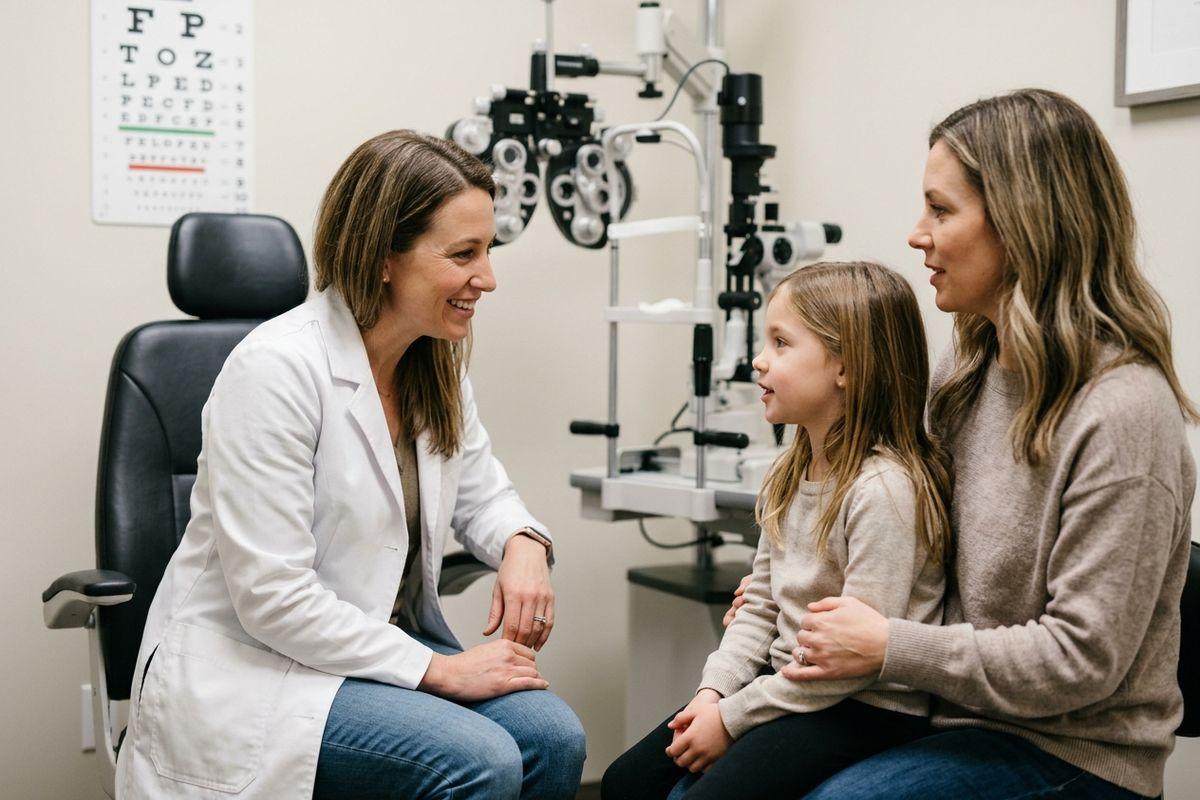
Mild hyperopia in young children sometimes improves on its own as the eye grows. Myopia typically does not follow the same pattern, which is why early monitoring matters. A children’s eye exam can help track these changes at the right stages of development.
Treatment Options for Myopia and Hyperopia
Corrective Lenses
Glasses and contact lenses remain the most common ways to manage vision conditions, with prescriptions tailored to help you see clearly at the distances that matter most to you. If you are interested in contact lenses, a specialized exam and fitting can confirm the best lens type and fit for your specific lifestyle.
Whether you require correction for near or distance vision, there are many flexible options available to suit your needs. You can choose from standard prescription glasses or opt for multifocal glasses and contact lenses if you require assistance at multiple distances. Contact lenses also offer additional convenience through various replacement schedules, including daily, bi-weekly, or monthly options, allowing you to select the regimen that fits best with your daily routine.
Myopia Control for Children
If your child’s myopia is progressing, there are effective options available beyond a standard prescription update. Myopia control focuses on slowing the advancement of the condition during these critical growing years, and research into low-concentration atropine eye drops has shown they can safely reduce progression in children by roughly half.
In addition to drops, specialized multifocal contact lenses can be integrated into a broader myopia management plan. Myopia control glasses are another option, using specially designed lenses that provide clear vision while helping to slow the progression of nearsightedness. They can be a convenient choice for children who prefer wearing glasses or may not be ready for contact lenses.
Taking action early is key, as it can help reduce the long-term risk of developing high myopia.
The Role of Eye Exams in Killarney
Regular eye exams do more than update your glasses prescription. They give your eye doctor the chance to track how your vision changes over time, catch early signs of refractive error in children, and make sure your current correction still fits your daily life.
A comprehensive eye exam covers far more ground than a quick vision screening. At Eye Q Optometry, personalized care means our team takes the time to get to know you and your vision needs. Your eye health goes beyond reading a chart.
Whether you’re a parent keeping an eye on your child’s vision or an adult noticing changes of your own, a thorough exam is a practical first step. Reach out to our team to schedule your next visit.