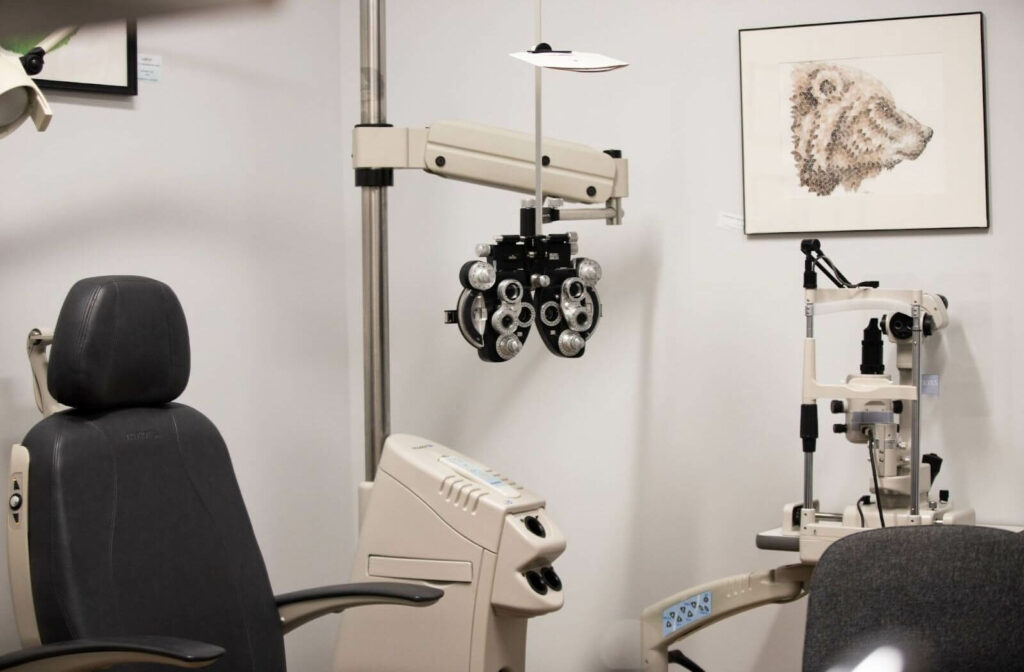
As a parent, you keep track of countless milestones in your child’s life, from their first step to their first word. Their vision development is just as important, but it can be harder to observe. One of the best ways you can support their eye health from the very beginning is with a trusted team like the one at Eye Q Optometry.
A pediatric eye exam is a simple and effective way to check your child’s vision and overall eye health. The process is designed to be comfortable and engaging for children, using age-appropriate activities instead of traditional tests.
When Your Child Should Have Their First Eye Exam
Scheduling that first eye appointment is one of the most important steps in your child’s development. The Canadian Association of Optometrists recommends a specific timeline to support your child’s developing vision and diagnose any potential issues early. Here are the general guidelines:
- First exam: Between 6 & 12 months old
- Second exam: Around 3 years old
- Annual exams: Every year after they start school
This schedule should work for most kids, but your optometrist may recommend more frequent appointments depending on your child’s vision needs. Early exams help detect vision problems when they’re often easier to address.
When Can a Baby See?
Your baby’s vision develops quickly during their first year. At birth, their world is mostly blurry shapes in black, white, and grey. They can focus best on objects, like your face, that are about 20 to 25 centimetres away.
Around 3 months, your baby starts to see more colours and can follow moving objects with their eyes. By 6 months, their depth perception improves, which helps them see the world in 3 dimensions. As they approach their first birthday, their vision becomes much clearer, similar to an adult’s.
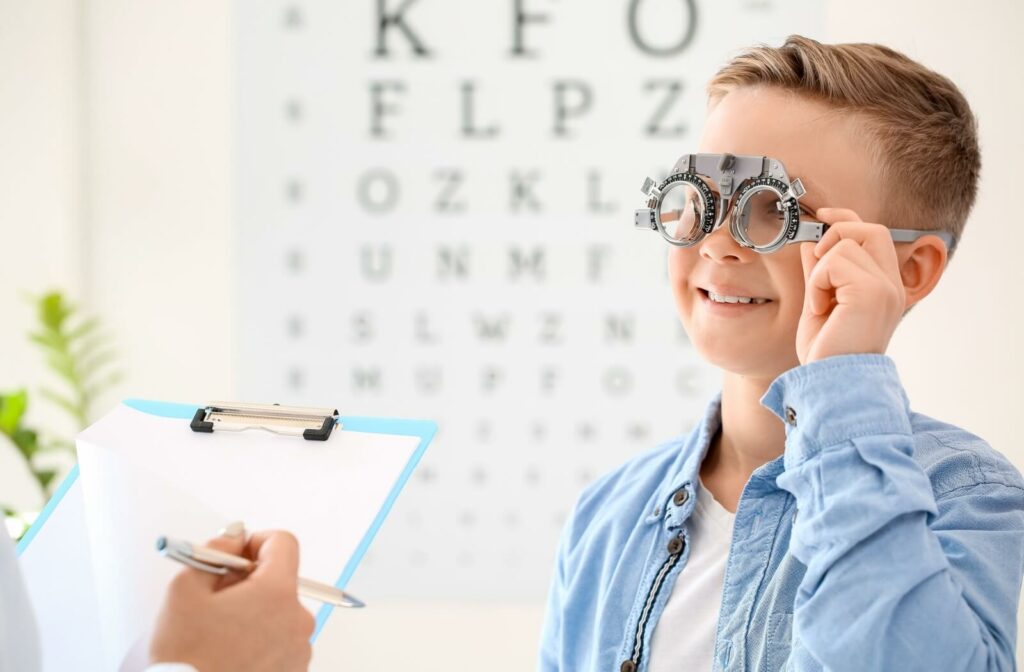
What Happens During a Kid’s Eye Exam
A child’s eye exam is tailored to their age and development. The visit is usually straightforward and focuses on a few key areas of your child’s vision:
Vision Assessment
Our team uses age-appropriate tools to check how clearly your child can see. Instead of a letter chart, your child might look at pictures, follow lights, or match shapes. This can turn the exam into a game to help kids have fun while reviewing their prescriptions.
Eye Coordination
Eyes need to work together to provide clear, comfortable vision, and much of that coordination is learned in childhood. During an eye exam, your optometrist evaluates how your child’s eyes work together using several specialized tests. Beyond tracking a moving object, this can include cover testing, reflex assessments (such as Hirschberg or Bruckner testing), and other age-appropriate methods to confirm proper eye alignment and coordination.
Eye Health Assessment
Eye care is about more than just clear vision, which is why your optometrist can use special lights and lenses for a thorough eye health assessment. We can look for early signs of developmental vision problems to support healthy growth in the coming years.
Common Vision Conditions in Children
Regular eye exams can identify several common conditions that affect children’s vision. It’s important to uncover these issues early, as early detection allows for timely support so your child can see the world clearly.
- Myopia: Also known as nearsightedness, where distant objects appear blurry.
- Hyperopia: Known as farsightedness, in which close-up objects are harder to focus on (In kids, their near vision would not necessarily be blurry, but it is much harder for them to focus up close)
- Astigmatism: Causes blurred vision at all distances due to the shape of the eye.
- Amblyopia: Often called a “lazy eye,” where one eye has reduced vision.
- Strabismus: An eye turn, where the eyes do not line up or work together.
Signs Your Child May Have a Vision Problem
Children may not realize their vision is different from anyone else’s, so they often don’t complain. However, you can watch for certain behaviours that may indicate a vision issue that optometrists can address with treatments such as glasses or vision therapy.
- Frequently squinting or rubbing eyes
- Covering one eye to see better
- Complaining of headaches, especially after reading
- Holding books or devices very close to the face
- Unusual clumsiness or difficulty with coordination
- Avoiding reading or other close-up activities
- Delays in visual or developmental milestones
- Frequent head tilting or turning to one side
- A white or unusual reflex in photos instead of a red eye
Set Your Kids Up for Success
Clear vision is fundamental to how your child learns, and an undetected vision problem can make classroom learning more challenging. When your child can see the board, read without strain, and focus comfortably, they have the tools they need to engage in school.Give your child all the tools they need to succeed by scheduling regular eye exams. To book an appointment with one of our passionate optometrists, contact the team at Eye Q Optometry today.